










Escolher a melhor máquina de remo indoor econômica não é simplesmente optar pelo menor preço. Trata-se de encontrar um equipamento que ofereça um treino suave e eficaz, se encaixe bem na sua casa e continue confiável muito depois daquele primeiro pico de motivação.
O mercado está repleto de remadores que podem parecer semelhantes online, mas que oferecem sensações muito diferentes no uso. Alguns utilizam resistência a ar, mais ruidosa; outros contam com sistemas magnéticos silenciosos; enquanto os remadores a água priorizam uma sensação de remo mais natural. Há ainda modelos hidráulicos ultracompactos, pensados principalmente para economizar espaço.
Este guia foi criado para ajudar você a escolher o remo certo e econômico para as suas necessidades. Ele compara sistemas de resistência a ar, magnéticos e a água e destaca erros comuns a evitar ao comprar em diferentes faixas de preço.
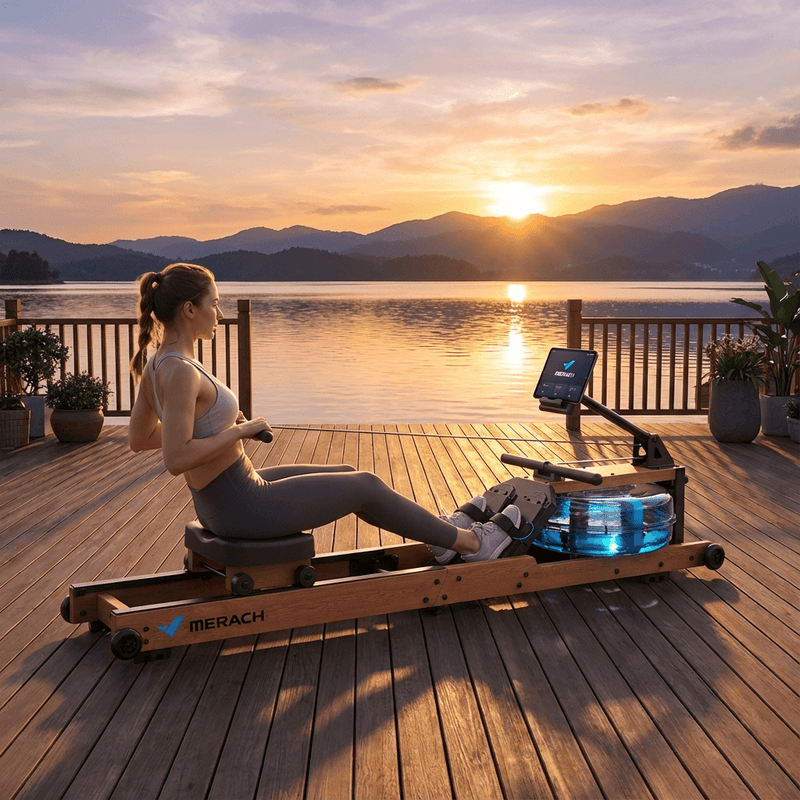
Também vale a pena notar que marcas como a Merach são cada vez mais reconhecidas por oferecerem uma excelente relação qualidade-preço — especialmente para utilizadores que querem uma experiência de treino fiável sem pagar preços de topo.
1. Por que uma Máquina de Remo Indoor é uma Escolha Econômica Inteligente
Ao montar um ginásio em casa, muitas pessoas na Europa tendem a considerar primeiro uma passadeira ou bicicleta de exercício. No entanto, uma máquina de remo é muitas vezes uma das opções mais eficientes e versáteis disponíveis.
Ela reúne vários benefícios em um único equipamento:
- Um treino de corpo inteiro que envolve pernas, core e parte superior do corpo
- Baixo impacto nas articulações em comparação com a corrida
- Adequado tanto para cardio contínuo quanto para treinos intervalados de alta intensidade
- Ideal para melhorar a resistência geral
- Adaptável tanto para iniciantes quanto para usuários mais experientes
Remar não é apenas cardio. Quando usada corretamente, a máquina de remo combina treino de resistência e de força, sendo particularmente eficaz se o espaço é limitado e você quer um único equipamento que atenda a múltiplas necessidades.
2. Escolhendo o tipo de resistência certo
Antes de comparar marcas, é importante decidir qual sistema de resistência se adapta melhor ao seu estilo de vida e às suas preferências de treino. A maioria dos remos indoor se enquadra em quatro categorias principais: ar, magnético, água e hidráulico.
1) Remos a ar (resistência a ar)

Os remadores a ar utilizam um sistema baseado em ventoinha em que a resistência aumenta com o esforço. Quanto mais forte você puxa, mais resistência sente.
Vantagens
- Muito adequada para treinos intervalados e funcionais
- A resistência se adapta naturalmente ao seu esforço
- Normalmente robusto e durável
Considerações
- Perceptivelmente mais barulhenta do que outros tipos
- Frequentemente maiores e menos adequados a espaços pequenos
Para quem busca uma experiência mais parecida com a da academia em casa, os remos a ar são uma ótima opção — desde que o ruído não seja um problema.
2) Máquinas de Remo Magnéticas

Os remos magnéticos utilizam níveis de resistência ajustáveis controlados por ímanes, oferecendo uma experiência mais silenciosa e controlada.
Vantagens
- Muito silenciosa — ideal para apartamentos ou espaços compartilhados
- Resistência suave e consistente
- Frequentemente concebidas para serem compactas e fáceis de arrumar
Considerações
- Sensação menos dinâmica em comparação com sistemas a ar ou água
- O desempenho pode variar dependendo da qualidade de construção
Para muitas casas, os modelos magnéticos oferecem o melhor equilíbrio entre conforto, nível de ruído e preço. É também nesse segmento que marcas com foco em valor, como a Merach, costumam se destacar, priorizando estabilidade, usabilidade e desempenho confiável.
3) Remadores a água

Os remos com água utilizam um tanque e pás para reproduzir a sensação de remar na água. A resistência aumenta naturalmente conforme o esforço.
Vantagens
- Sensação de remo realista
- Experiência de treino suave e envolvente
- Frequentemente com bom aspeto estético
Considerações
- Mais pesada e menos fácil de mover
- Requer manutenção ocasional (tratamento e verificação do nível da água)
- Menos opções acessíveis nas faixas de entrada
Remadores a água são atraentes se experiência e design são importantes para você, embora nem sempre sejam a opção mais econômica.
4) Remadores Hidráulicos
Remadores hidráulicos usam resistência à base de pistão e geralmente são a opção mais acessível.
Vantagens
- Baixo custo
- Compacta e que poupa espaço
Considerações
- Movimento de remada mais curto e menos natural
- Pode aquecer durante sessões mais longas
- Desempenho geral menos consistente
Podem ser adequadas para uso ocasional, mas geralmente deixam de atender às necessidades de usuários frequentes com o tempo.
3. Como escolher com base no uso real (e não em promessas de marketing)
A forma mais simples de escolher um remo indoor é adequar o tipo à forma como realmente vive e treina.
Se você mora em apartamento ou divide paredes
Um remador magnético costuma ser a escolha mais prática.
Ele funciona de forma silenciosa, é fácil de usar no dia a dia e se adapta bem a espaços menores.
Uma boa opção para cardio consistente e perda de gordura a longo prazo.
Se você foca em HIIT ou treino de performance
Os remos a ar são muito adequados para treinos de maior intensidade.
A resistência aumenta naturalmente com o esforço, tornando‑os ideais para intervalos, sprints e treinos funcionais como o CrossFit.
Se Você Prefere uma Sensação de Remo Mais Natural
Os remos de água oferecem uma sensação mais suave e fluida.
O ritmo é mais próximo do remo real, o que muitas pessoas consideram mais envolvente para sessões longas e constantes.
Se você está montando uma academia prática em casa com orçamento limitado
Os remadores magnéticos costumam ser a opção mais equilibrada.
Eles são mais silenciosos do que os modelos a ar, fáceis de conviver e oferecem ótimo custo-benefício dentro da faixa acessível.
É aqui que marcas como a Merach naturalmente se destacam: muitos compradores não buscam simplesmente o menor preço, mas sim uma máquina confiável e bem projetada, que ofereça uma boa sensação de remada, conforto e usabilidade — sem recursos desnecessários.